

Thank you for Subscribing to Cannabis Business Insights Weekly Brief
Cannabis Business Insights: Specials Magazine
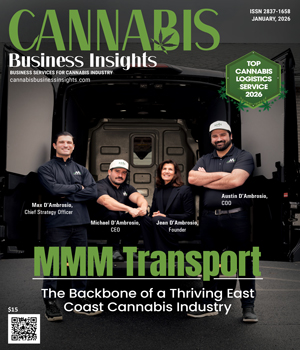
No supply chain in modern business carries the same regulatory weight as cannabis. Every gram tracked. Every manifest reconciled. Every dollar is moved under watch. For most operators, that pressure has meant juggling multiple vendors — delivery, cash, waste — all under separate contracts, audits and timelines. MMM Transport was built to make that chaos workable. Founded in Massachusetts by Jean D’Ambrosio and operated by her sons Michael, Austin and Max, MMM began with a single van, no outside capital and one goal—to learn the business from the inside out. “We drove the trucks ourselves for over a year,” recalls Max D’Ambrosio, co-founder. “We wanted to hear firsthand where operators were hurting, from the grow rooms to the dispensaries.” That hands-on experience shaped the company’s DNA; a culture rooted in accountability and relentless follow-through. Even as the business scaled to more than 20 vans, 75 employees and multi-state operations, that original ethic never changed. When schedules overflow or weather shuts down routes, one of the brothers still climbs into a truck. It’s not a gesture, it’s a standard. Creating the Conditions for East Coast Success As legalization reached the East Coast, a familiar pattern emerged; fragmented supply chains, inconsistent oversight and high regulatory friction. Every state wrote its own rules; every operator was left to interpret them alone. MMM saw the problem for what it was, not just an operational inefficiency, but the single greatest barrier to a stable, profitable market. So, the D’Ambrosios built what the region lacked — continuity. Rather than offering point-to-point transportation, MMM built an integrated framework that unites logistics, compliance and communication into one seamless process. Whether moving finished goods, fresh-frozen bulk or certified waste, every step flows through the same accountable system, from pickup to manifest to regulatory approval. “We’re not just moving product,” says Max. “We’re creating the conditions where every stakeholder — cultivators, retailers and regulators — can operate with confidence.”
Cannabis Cultivation and Dispensary Operator of the Year 2026
Berkshire Roots, a Massachusetts-based cannabis operator, has firmly established itself as a pioneering force in both the medical and recreational cannabis markets. The company began its journey with a medical license in 2018 and expanded into the recreational market a year later, becoming one of the first vertically integrated operators in the state. As the cannabis industry in Massachusetts grew rapidly and competition intensified, Berkshire Roots found itself needing to adapt. However, as CEO Kristopher Foley explains, adapting did not mean abandoning the company’s origins. “We have been rethinking things a bit,” says Foley. “As the marketplace has evolved, we are now focusing on bringing balance, creativity, and connection to our customer base. We are crafting and curating products with care on site, innovating while staying true to what our loyal customers love.” His words reflect a commitment to returning to the values that shaped Berkshire Roots in its early days. From the beginning, the company set out to operate like a small farm or craft brewer, prioritizing the care, attention, and quality that mass production often overlooks. As the market became saturated with new dispensaries and products, it became clear that not everything belonged on the menu. Instead of trying to appeal to everyone, Berkshire Roots focused on the products they were truly passionate about and knew would stand out. “We are focused on doing what we do best,” Foley says. “It is about being honest with ourselves and our customer base. There are other great companies that make some products better than we do, and we would rather leave those to them and concentrate on what we can do at the highest level.”
Top Customizable Packaging Solutions for Cannabis

Good cannabis packaging goes beyond aesthetics; it plays a crucial role in ensuring compliance, streamlining production and enhancing product performance at retail. HiStandards operates at the intersection of these challenges. Founded in 2021 and headquartered in Troy, Michigan, the company serves as a one-stop partner, offering compliance-ready, custom-designed bags, tubes, jars, labels and display materials. What sets HiStandards apart is its focus on custom development. From the very first design stage, the team applies engineering judgment to align regulatory requirements, production realities and retail performance. This thoughtful approach ensures that each design format meets functional requirements before finalization. HiStandards’ team brings deep industry expertise to every project. Led by a founder with over a decade of professional design experience, the company employs senior graphic and industrial designers who specialize in cannabis-specific packaging. While scalable, ready-to-deploy solutions are available, the same process also supports full customization. Using proprietary CAD and 3D design, HiStandards creates brand-specific packaging solutions, all from the ground up.
CXO INSIGHTS

The New Frontier of Sustainability
Paul Bonnett, Senior Director of Digital Agronomy & Data Science, Nutrien
Six Sigma's Impact on the Agriculture Industry
Robert King, Executive Vice President, Crop Protection, Corteva Agriscience

Driving Sustainable Innovation in the Tech-Driven Era
Shola Oyewole, MBA, Vice President – Digital Innovation, United Therapeutics Corporation

Why it's challenging to attract and retain employees?
Mike Cleary, VP of Finance and Administration

Technological Evolution in Clinical Data Management
Armand Matejunas, Sr. Director of Clinical Data Operations, Pacira BioSciences Inc

The Role of Patient Reported Outcomes to Support Reimbursement and Market Access in Major European Countries and the US
Lothar Tremmel, Vice President, QCSR (Quantitative Clinical Sciences and Reporting), CSL

Immunology: From Pioneering Discoveries to Opportunities
Asif H. Khan, MD, PhD, MPH, Global Senior Medical Director, Immunology, Sanofi; Moataz Daoud, PharmD, Global Medical Immunology Pipeline Lead, Sanofi; Paul Rowe MD, ATS, Vice President, Head of Medical, Specialty Care, North America, Sanofi


IN FOCUS
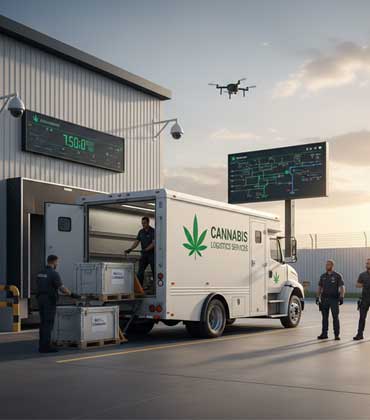
Medical Cannabis Logistics: Specialized Handling for Patient-Centered Distribution
The medical cannabis industry now prioritizes pharmaceutical standards in logistics, employing advanced cold-chain technologies and integrated tracking systems to ensure product quality, security, and patient accessibility.

Customizable Packaging as the Ultimate Brand Differentiator in the Cannabis Marketplace
Cannabis packaging now drives brand differentiation, sustainability, and consumer engagement through material innovation, smart technology, and sensory design—transforming containers into strategic tools for storytelling and trust.
EDITORIAL
The Rise of Fertigation and Modern Packaging in Cannabis
Cannabis is no longer proving that it can exist within regulation. It is proving whether it can scale because of it. What once felt like constraint has become the defining architecture of growth. From logged transfers to inspected facilities and verified products, oversight now defines the industry. In this environment, advantage no longer comes solely from speed. It comes from precision across logistics, medical integrity, compliant design, and controlled seed movement. The quiet operators behind these systems now shape the real velocity of the market.
Operators juggle secure transport, tight temperature control for medical products, specialized architectural planning, and licensed seed distribution across state rules that rarely align. Fragmentation forces businesses to manage multiple vendors, audits, and data systems at once leading to high cost. The market has learned that integration is the lever that unlocks margin and momentum.
This edition features MMM Transport, a company built inside those constraints. Born in Massachusetts from a family team operating out of a single van, MMM has built its understanding of the industry from the ground up. Early years of direct operation shaped a culture of accountability that still defines the organization as it operates at multi state levels. Instead of point to point hauling, MMM developed a unified framework that connects logistics, compliance and communication into a single audited flow.
Its system moves finished goods, fresh frozen material, and certified waste through a single accountable chain tied directly to live regulatory data. Nearly 200 licensed producers rely on that network each week. Performance at that level changed the role of transport from convenience to essential infrastructure, especially during peak demand periods when failure has no buffer.
What becomes clear is that cannabis is no longer testing whether it can operate within regulation. It is now learning how to grow because of it. Logistics, medical product integrity, compliant architecture, and disciplined seed movement define speed, safety, and credibility.
Markets that master this backbone will see stable growth. The next phase of cannabis will not be shaped by hype. It will be shaped by infrastructure that works quietly, consistently, and at scale.
