

Thank you for Subscribing to Cannabis Business Insights Weekly Brief
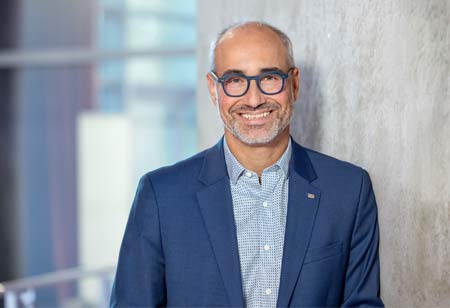
Through this interview, Michaud highlights that to thrive in today’s complex landscape, pharma must embrace personalized medicine, strengthen data-driven and digital communication strategies and position Medical Affairs as a strategic pillar. Success, he suggests, lies in smarter resource allocation, rapid external feedback and a renewed focus on patient-centric integration.
While defining success in pharmaceuticals can be somewhat like beauty, “Individually perceived and hard to define”, his own simple definition consists of the following: “Maximize and accelerate the integration of treatments to clinical practice, to optimize patients’ outcomes and company’s success”
These few words appear sufficient to layout success, materialize them into pragmatic and tangible downstream impact constitutes a paramount achievement, given the increasing complexity of the healthcare landscape.
A balancing act between complexity and limited resources
A basic challenge lies in the rightful emergence of personalized medicine: how might we, pharma colleagues, be successful at developing, registering and integrating medicines for a targeted group of patients (hence smaller in number) while sustaining the current requirements of complex developmental paths requiring significant resources? In addition, the mere accumulation of treatment options in each therapeutic area also contributes to an increase in complexity on how to optimally position and sequence them.
Such balancing act demands that we start doing things differently to foster a ratio of investments or revenues that will enable success and sustainability, hence bringing water to the well of our respective companies’ innovative discovery efforts and resulting pipelines. Successfully achieving this will require us to not only shift how we invest resources, but also seek to obtain rapid feedback from the external world so that we can redeploy them as needed, removing from low impact activities to feed into high-impact domains.
Strong Medical foundations and rising challenges
The evolving complexity of healthcare and limited resources demand that pharma strengthen its ability to engage external stakeholders— educating them on treatments and supporting datasets. I remain convinced that Medical strategy, primarily executed in the field by Medical Science Liaisons (MSLs), plays a vital role in integrating treatment options into clinical practice. A live discussion between an HCP and an MSL—where data is not only shared but fully contextualized within the realities of clinical practice, available options and access barriers—has always been and remains in my view, the most effective way to elevate HCP awareness and understanding.
A live discussion between an HCP and an MSL—where data is not only shared but fully contextualized within the realities of clinical practice, available options and access barriers—has always been and remains in Michaud’s view, the most effective way to elevate HCP awareness and understanding.
One barrier is the lasting impact of COVID, which has led some institutions to restrict access to clinicians or limit their participation in external conferences. The traditional top-down flow of knowledge—from international or national experts to community practitioners—was also disrupted. This model alone no longer suffices and must be supported by more innovative approaches.
Despite these challenges, field medical teams have made clear progress. Over the past decade, we’ve shifted from ‘data dumping’ to delivering clear, relevant insights placed in context. Today, effective education relies on multi-channel strategies that let HCPs access the information they want, in the format and timing they prefer. Digital education has become essential: one study shows interactive content improves retention by 25–60 percent compared to passive formats. Finally, valuable insights from MS–HCP discussions are now systematically gathered and analyzed to inform, shape—and at times, positively disrupt—Medical strategy, aligning it more closely with downstream clinical impact.
The need to evolve our capabilities in communication
I am now also convinced that, given the increasing complexity of the landscape, face-to-face engagement alone is no longer sufficient and must be complemented by additional value-driven Medical communication activities.
Non-personal Communication: To successfully reach as many HCPs as possible and stretch available resources, Medical must now learn to efficiently leverage appropriate non-personal communication. These efforts can range from digital methods that increases access to key online publications and websites, to truly tailor digital journeys and education specific to each HCP’s preferences—the true Omni channel unicorn.
Becoming Data-driven: If we accept the premise that limited resources will always force us to make choices about what to execute, then having robust input data and strong analytical capabilities should guide where we focus—and what we abandon. At the core of becoming data-driven lies our ability and willingness to gather data, however simple, to form an analyzable data lake. One organic example from my current company was methodically capturing, through our field Medical team, HCP reactions to specific patient profiles. Learning what data should be captured, how these datasets integrate into our analytical framework and what outputs they generate is a long road—but one we must travel. Hopefully, we will learn quickly and find valuable shortcuts along the way.
Fostering Medical as a Core Strategic Contributor: If we aim to integrate treatments into clinical practice—and agree that the Medical function is the key expert not just on our molecules but also on the therapeutic landscape— then it should be clear across pharma functions that Medical must be a main contributor, accountable for driving near- to mid-term lifecycle management of emerging treatments. While this is well established in some companies, others still struggle to define the appropriate role and interplay of Medical between R&D and Commercial.
Enhancing our capacity to engage externally will help advance medicine in a patient-centric way, while also supporting a positive business outcome. This, in turn, will foster financial sustainability and bring proverbial water to our pipeline wells. It’s essential to ensure our industry continues to thrive in delivering innovative, life-impacting treatments in ways that align with the healthcare system’s capacity for integration.
I agree We use cookies on this website to enhance your user experience. By clicking any link on this page you are giving your consent for us to set cookies. More info

However, if you would like to share the information in this article, you may use the link below:
https://www.cannabisbusinessinsightsapac.com/cxoinsight/sebastien-michaud-nwid-593.html