

Thank you for Subscribing to Cannabis Business Insights Weekly Brief


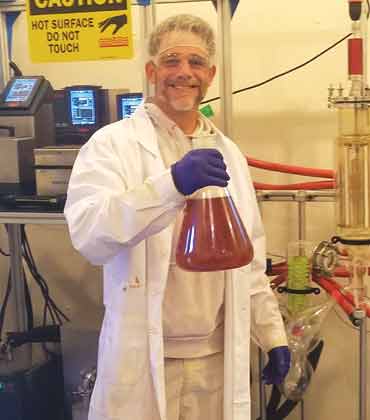 Michael Goodenough, CEO
 It partners with local farmers who produce industrial hemp to the highest standards while also cultivating its own hemp. The company carefully selects only premium genetics for its CBD hemp plants, which are processed using all-natural methods to create full-spectrum oil rich in CBD. SweetHeal focuses on small-batch extractions and employs advanced distillation techniques to produce a full-spectrum oil free from harmful residues left by hydrocarbon-based solvents. The company achieves this by using ethanol as the extraction solvent. This resulting oil is then used to formulate the products offered to consumers and sold in bulk to other manufacturers.
The extracted CBD is also sent to universities and research institutions, such as UMass, UConn, and Eastern, where SweetHeal focuses on hemp-related research. These studies explore the bioavailability of cannabinoids, the endocannabinoid system, and how different membranes—such as digestive and skin tissues—process these molecules.
“We have taken on the responsibility of preserving the intrinsic essence and individuality of hemp compounds, transforming hemp sourced from farms into products that heal, inspire, and innovate,” says Michael Goodenough, CEO of SweetHeal.
Each batch of 1,000 or 2,000 pounds of hemp from a farmer contains a variety of cannabinoids like CBT, CBN, CBG, CBM, and more, with 148 different molecules in total. The company doesn’t lump everything together and process it in one go; instead, it takes a more refined approach. SweetHeal ensures that it retains the specific characteristics of each strain by treating every batch with care. On the other hand, some farmers may use guano or maca from Latin American origins, lavender, or even their own honey. These unique ingredients tell the story of each farm’s ecosystem. SweetHeal crafts formulations around the wellness potential of the entire plant, tailoring products to reflect not only the farm but also the specific brand. This approach sets SweetHeal apart from companies that produce generic salves or lotions.
-
We have taken on the responsibility of preserving the intrinsic essence and individuality of hemp compounds, transforming hemp sourced from farms into products that heal, inspire, and innovate
The company produces over 800 different products, understanding how to work with various oils to ensure effective ingredient blending. Whether incorporating magnesium, minerals, or vitamins, SweetHeal addresses the distinct needs of water-soluble and oil-soluble ingredients, each requiring different approaches. It strives to create more than just simple products, such as goat’s milk lotion, by integrating key elements like vitamins A and C and other wellness-focused ingredients. Each product is a high-quality formulation that reflects the authenticity and efficacy of the farm or brand from which it originates.
 SweetHeal collaborates with international brands that have highly specific wellness goals and ingredient requirements. By bringing deep expertise in chemistry and product development to the table, the company ensures every product is not only functional but also enhances well-being.
 Many of the ingredients SweetHeal works with provide significant value-added benefits. For instance, it incorporates elements like aphrodisiacs, natural caffeine sources, maca, guarana, magnesium, and other botanicals. These formulations are often developed in collaboration with pharmacists or doctors to create products with clear purposes.
One example is a farmer who grows mullein, a plant with cleansing properties that support respiratory health. For this farmer, SweetHeal developed a tincture combining mullein with chlorophyll extracted from RSO. This tincture specifically targets respiratory wellness, offering a natural and effective solution.
In another case, SweetHeal created all-natural hard candies using honey sourced directly from a farmer, avoiding processed sugars or corn syrups. This approach highlights the farmer’s produce while aligning with a healthier, more natural philosophy. These examples illustrate how the company tailors products to showcase each farm’s unique strengths while promoting wellness and sustainability.
Connecticut’s status as a leading apple-producing region provides SweetHeal with a valuable edge. The company replaces traditional gelatin in gummies with apple-derived pectin, making its products vegan-friendly while maintaining a high-quality texture.
 Looking ahead, SweetHeal is focused on education. It is currently working with seven major universities to train the next generation of cannabis industry leaders. Additionally, it has founded the Connecticut Cannabis Small Business Alliance and the New England Cannabis Sustainability Council.
 SweetHeal’s ambitions extend beyond hemp. It plans to expand into the broader cannabis market by providing minors and terpenes and developing a full range of cannabis cultivars. Today, the company aims to break down old stigmas surrounding cannabis, promote sustainability, and help farmers unlock the full potential of their harvests while sustaining their businesses.
Cannabis Extraction Buying Priorities Shift Under Regulatory Compression
Cannabis extraction purchasing has become tangled in legal interpretation long before buyers reach questions about throughput or formulation capacity. Hemp producers, wellness brands and research programs now operate inside uneven state rules that can invalidate finished inventory depending on how cannabinoids are processed rather than how they are grown. That distinction has changed procurement behavior across the cannabis wellness and hemp-derived products sector. Extraction partners are now evaluated less on scale alone and more on how precisely they manage molecular consistency, documentation and formulation controls under unstable compliance conditions.
Small-batch processing has gained renewed attention because large consolidated extraction runs often flatten cultivar-specific characteristics that wellness brands increasingly want preserved. Buyers developing tinctures, topicals or ingestibles are paying closer attention to terpene retention and minor cannabinoid separation since product differentiation has become harder in a crowded CBD market. Commodity extraction can still satisfy bulk isolate demand, though it creates limitations for brands attempting to build formulations around distinct cannabinoid profiles tied to a specific farm or harvest cycle.
Procurement pressure has also shifted upstream. Hemp farmers once depended on extraction relationships to extend margins beyond raw flower sales through white-label manufacturing or concentrated oil distribution. Restrictions surrounding extractable cannabinoids in several states have narrowed those revenue channels. That compression has left many buyers cautious about relying on processors that cannot clearly explain remediation practices, concentration thresholds or how finished formulations are interpreted under local enforcement standards. Legal ambiguity now reaches directly into purchasing decisions because compliance failures can affect inventory movement, insurance exposure and retailer acceptance.
Manufacturing depth matters more than broad product catalogs. Buyers evaluating extraction companies increasingly examine whether formulation teams understand ingredient interaction beyond cannabinoid infusion itself. Wellness products involving botanical additives, mineral blends or farm-specific ingredients require chemistry expertise that extends into solubility behavior, emulsification methods and dosage stability. Private-label buyers have become wary of generic base formulations dressed up with interchangeable branding because retailers now expect stronger product distinction and tighter consistency across repeat batches.
Research capability has also become a separating factor. Universities and medical research groups continue exploring bioavailability, membrane absorption and delivery methods tied to cannabinoids and terpene combinations. Extraction companies participating in that research environment often maintain stronger process controls because laboratory work demands repeatability. Buyers involved in wellness manufacturing increasingly view those relationships as indicators of technical maturity rather than marketing credibility.
Within that environment, Sweet Heal aligns closely with the pressures shaping cannabis extraction purchasing decisions. The company’s emphasis on small-batch extraction and cultivar-specific processing addresses buyer concerns around terpene preservation and molecular consistency rather than commodity throughput alone. Its manufacturing model also extends beyond standard CBD infusion into formulation work tied to botanicals, honey-based products and wellness-focused topical applications developed around individual farm inputs. Sweet Heal’s involvement with university cannabinoid research and its experience navigating Connecticut’s restrictive hemp rules give it practical familiarity with compliance uncertainty that many processors now face. For buyers requiring extraction support connected to formulation depth and controlled batch handling, it presents a grounded option shaped by current market constraints rather than expansion-driven positioning.
...Read more
