

Thank you for Subscribing to Cannabis Business Insights Weekly Brief


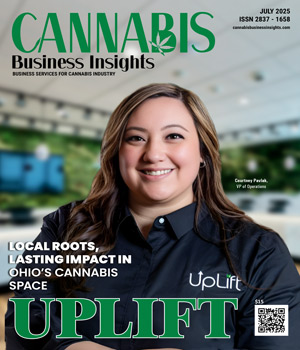
 Courtney Pavlak, VP of Operations
Uplift was built to do things differently.
Proudly Ohio-owned and operated, Uplift is not just another dispensary—it’s a local business created with purpose. From the beginning, the focus has been on building trust rather than just making sales. The company offers expert guidance, top-quality products, and a customer experience shaped by the values of the community.
“As an independent, locally owned dispensary, we’re not answering to out-of-state stakeholders—we’re answering to the communities we serve. That gives us the ability to innovate quickly, connect authentically, and always put people first,” says Courtney Pavlak, VP of Operations at Uplift.
Community Connection Over Corporate Expansion
While others scale quickly to please investors, Uplift invests in something different: trust, relationships, and community. Its ownership team lives in the same cities it serves, and its decisions reflect that. From partnering with Ohio growers to hiring local staff and supporting nearby nonprofits, the company’s impact stays where it matters most—the communities that made it possible.
Uplift also makes an intentional effort to hire from the communities it serves and to source from Ohio-based growers whenever possible. This keeps jobs, investment, and impact local—strengthening the same neighborhoods that support its growth.
-
As an independent, locally owned dispensary, we’re not answering to out-of-state stakeholders—we’re answering to the communities we serve. That gives us the ability to innovate quickly, connect Courtney Pavlak, authentically, and always put people first
This independence gives Uplift a distinct advantage: the ability to innovate faster, personalize service more deeply, and respond quickly to changes in the market or community. When adult-use legalization expanded, many dispensaries stumbled trying to serve two markets. Uplift adapted with care, preserving priority access for medical patients while welcoming new adult-use customers with a thoughtful, education-first approach. The result was a 160 percent increase in its customer base within 90 days—all while retaining over 90 percent of existing medical patients.
Where Education and Empathy Meet
For first-time cannabis consumers, entering a dispensary can be intimidating. Uplift understands that. Its staff is highly educated in product knowledge and treats every customer with compassion. Budtenders act more as guides than salespeople, asking reflective questions and explaining everything—from terpenes to dosing—in easy-to-understand, approachable language. The company also uses in-store iPad menus and patient-style counseling to help turn confusion into confidence.
This approach has proven successful. Customers leave feeling educated—not overwhelmed—which turns curiosity into loyalty.
The Kindness Project and a Dispensary Built for Ohio
What truly sets Uplift apart is its belief that a cannabis business should do more than just serve customers—it should serve the community. Through its initiative, The Kindness Project, Uplift donates to both national and local charities. It has partnered with Habitat for Humanity, Toys for Tots, and EmPath for Autism, and has organized sensory toy drives, hurricane relief donations, and Ohio River cleanups.
These are not marketing campaigns; they are an extension of Uplift’s core values— staying small enough to care and strong enough to act.
In a market where many dispensaries feel interchangeable, Uplift remains true to its roots: serving Ohio communities with purpose and pride. This isn’t a chain chasing scale—it’s a local business focused on people, built by neighbors who live where they work and give where it counts.
At Uplift, cannabis is not corporate—its personal.
Ohio Cannabis Retail Is Moving Beyond Expansion Metrics
Ohio dispensaries learned quickly that recreational cannabis sales did not automatically create customer loyalty. Opening-day demand was strong across the state, though many stores soon faced a different reality once the novelty faded. Customers returned only to places where the experience felt approachable. Price mattered, but comfort mattered more than many operators expected.
That shift has exposed weak spots across the retail side of cannabis. Some dispensaries still move customers through the store as quickly as possible, assuming product variety alone will keep people coming back. New consumers usually react differently. Many walk in unsure what to buy, uncertain about dosage and unfamiliar with the language used around cannabis products. A rushed interaction often sends those customers elsewhere the next time.
Retail buyers watching the Ohio market have become more careful about how dispensary groups handle customer interaction at store level. Scripted sales conversations rarely build trust. Staff who can explain products casually, answer nervous questions and adjust recommendations without sounding mechanical tend to leave a stronger impression. Small things shape repeat business in this market. Customers remember whether somebody listened to them. They remember whether the store felt welcoming or uncomfortable.
The pressure has increased since adult-use sales expanded. Medical patients still expect consistency while recreational traffic continues growing. Some operators struggled once both audiences began sharing the same retail environment. Inventory gaps became more noticeable. Wait times stretched longer. Customer service slipped in stores where staffing plans were built only around sales volume instead of actual customer flow.
Ownership structure also affects how quickly dispensaries respond when those problems appear. Large cannabis chains usually follow centralized approval systems tied to several markets at once. Independent operators often move faster because store managers stay closer to customer behavior inside their own communities. Product trends shift quickly in cannabis retail. Consumer habits change quickly too. Delayed decision-making becomes visible almost immediately on the sales floor.
Uplift dispensary has leaned into a more community-based approach instead of chasing a heavily standardized retail model. Its stores place noticeable emphasis on customer education, especially for people entering a dispensary for the first time. Conversations around product types, intended effects and dosing are handled more like guidance than upselling. That approach carries over from the company’s medical cannabis background where customer trust tends to matter more than transaction speed.
The company’s Ohio ownership also shapes how it reacts to local demand. Product selection, promotional ideas and community involvement stay closely connected to the neighborhoods surrounding each store rather than being filtered through out-of-state leadership. That flexibility became especially useful during the transition into adult-use sales when customer traffic patterns changed rapidly across the state.
Uplift has also remained visible outside retail settings through volunteer work and local partnerships tied to community programs. Those efforts may not dominate marketing campaigns, though they strengthen familiarity in a business where trust still carries unusual weight. For buyers reviewing dispensary groups in Ohio, the company presents a practical example of how local awareness and thoughtful customer interaction can still stand out in a crowded cannabis market.
...Read more
