
Thank you for Subscribing to Cannabis Business Insights Weekly Brief

Hale Farm Pty Ltd
Alex Sandorf, Head of Production
When the Best Opportunity isn’t here: Why I’m Building Cannabis Lab Operations Abroad
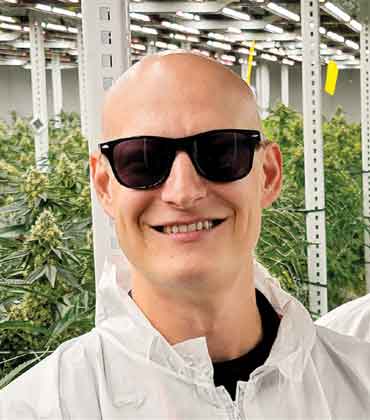
Alex Sandorf
Alex Sandorf is an experienced production and processing leader specializing in hydrocarbon extraction, GMP compliance, and largescale manufacturing operations. With over 16 years in regulated U.S. markets, he has built compliant facilities, optimized operations, and led high-performing teams across diverse industries.
One major lesson I’ve learned over the last 16 years in this industry is not to get tied down by emotional attachment to any specific market. I moved to the Midwest in 2021 from running a thriving lab in Southern California because I saw the early-2020s price compression coming and recognized the opportunity that incoming adult-use offered. Friends and peers told me I was crazy to walk away from the hottest cannabis market in the U.S. to go stand up a facility in Ohio (at the time a ‘medical only’ state with a patient count of ~120k!), however adultuse came through, sales exploded, and I watched those same friends and peers struggle as prices in Cali contracted and brands dropped left and right.
What it boils down to is that I’ve learned to tell the difference between a market that is merely difficult and one that is structurally stuck. The United States cannabis market right now is the second kind, and while the federal rescheduling in the works is a great step, I no longer see the U.S. as the value proposition it once was. That recognition is the reason I’m making a deliberate leap to build laboratory and extraction operations on the literal other side of the world.
This is not just pessimistic doom and gloom about the state of things in the U.S., either, but facts based on what we’re seeing today. Federal rescheduling gets framed as the breakthrough that finally opens the door, but what’s happening on the ground is far messier than the breathless headlines shouting about rescheduling would suggest. Rescheduling brings FDA-style oversight and pharmaceutical-grade GMP expectations that most domestic operators are nowhere close to meeting. The savviest processors are running gap analyses now, and the gap they’re finding is wide.
Section 280E and years of price compression have left operators strapped for cash, right when the capital requirements are steepest. Layer a state-by-state patchwork on top of that, dozens of incompatible regimes, none of which can legally cross a state line, alongside extremely limited access to traditional business financing channels, and what you end up with is an industry that is busy, expensive, and functionally running in place while it waits for regulation to hopefully catch up.
The global medical market, meanwhile, is moving quickly. European medical cannabis runs almost entirely on GMP-certified imports. Canadian, Australian, and European producers are already positioned to supply it because they built the infrastructure first. U.S. operators, even after rescheduling, are going to be starting a 12-to-24-month GMP certification climb from behind, and they’re doing it while still tangled in the federal and state contradictions that make export a legal non-starter today.
So, when I look honestly at the state of the U.S. market, I keep arriving at the same conclusion. The best opportunities may well be abroad.
A commodities play, not a brand play
Most operators entering this space chase downstream products. Branded oils, formulated SKUs, consumer recognition. I think that’s the wrong layer of the value chain for what’s coming. At Hale Farm, we’re implementing large-scale extraction through a Herbolea processing system built for a different purpose entirely. Not finished products, not brands, but bulk active pharmaceutical ingredient (API) production as a commodities play.
Hale Farm is an Australian-owned cultivator that earns the right to make that move. The company has built its reputation through a relentless focus on quality, growing organically in Tasmanian soil and taking home Cultivator of the Year at the 2025 Cannabiz Awards. That cultivation pedigree matters here because the credibility that wins a quality award is the same credibility a pharmaceutical buyer is looking for in an upstream supplier. We’re now applying that standard on an industrial scale.
“Learn the business model as fluently as you learn the science. The hardest problems I’ve faced were rarely analytical. They were about translating what the science demanded into what the business could fund and sequence.”
The logic is straightforward. Global medical markets don’t ultimately run on brands. They run on validated, consistent, pharmaceutical-grade input material that formulators and pharmacies downstream can trust without having to ask questions. Producing bulk cannabis API to that standard means meeting EU-GMP for active ingredients, a higher and more demanding bar than the food- or supplement-grade thinking that dominates the U.S. industry. It calls for proactive proof of safety and quality rather than documentation assembled after the fact. It is also the bar that unlocks the most valuable and least crowded position in the global supply chain: the reliable upstream supplier that everyone else depends on.
A facility designed around that standard from day one doesn’t have to try to retrofit its way into the global market years later. It starts there. Tasmania is a clear example of a jurisdiction that already thinks this way. It is the world’s largest single producer of licit pharmaceutical poppy alkaloids, the regulated raw material behind morphine, codeine, and thebaine, supplying close to half of global demand. That position wasn’t an accident. It came from a combination of geographic security and decades of disciplined regulatory oversight under a PIC/S and GMP framework. The same maturity that made Tasmania the trusted source for pharmaceutical poppies makes it a natural home for cannabinoid API production, and the state government actively supports operators willing to build under strict compliance protocols to seize these emerging opportunities.
The trend that decides who wins
If I had to name the force that will most reshape cannabis laboratory science over the coming years, it’s the closing gap between what counts as “cannabis quality” and what counts as “pharmaceutical quality.” The industry tolerated a two-tier reality for a decade. Good enough at home, a harder standard for anyone serious about pharma. That tolerance is ending. As exports become the growth story and regulators around the world converge on pharmaceutical-grade expectations, labs built around domestic assumptions will be shut out of the channels that actually pay. Lab and facility design has become a strategic decision made years ahead of the first sale, not a compliance task handled afterward.
For those building this career
A few things I’d offer to anyone aspiring to scientific leadership here. Learn the business model as fluently as you learn the science. The hardest problems I’ve faced were rarely analytical. They were about translating what the science demanded into what the business could fund and sequence. Build for the standard you’ll need, not the one you’re held to today, because aiming high from the start is almost always cheaper than retrofitting later. And treat geography as a variable rather than a given. The borders that constrain one market are often the doorways into another.
The U.S. industry isn’t finished. This isn’t doom and gloom. It is, however, stuck, and stuck is a reason to look outward. That’s the opportunity I’m leaving to seize, and the real question for any serious operator is whether they’ll recognize it early enough to still have a seat at the table when the borders finally open.
The articles from these contributors are based on their personal expertise and viewpoints, and do not necessarily reflect the opinions of their employers or affiliated organizations.
